
From AI Content to AI-Powered Marketing: A Practical Workflow for 2026
The Real Opportunity Is Bigger Than Content Creation
Artificial intelligence has made it easier than ever to write blog posts, generate social media captions, design advertising creatives, and analyze marketing data.
Yet many businesses are still using AI as a collection of disconnected tools. One platform writes content, another generates images, a spreadsheet tracks leads, and a separate analytics dashboard measures performance.
The result? Faster production, but not necessarily better marketing.
The next stage of AI-powered marketing is about connecting these activities into a coordinated workflow—one that understands the brand, responds to customer needs, supports decision-making, and contributes to business growth.
For professional marketers, the competitive advantage will not come from generating the largest volume of content. It will come from combining AI’s efficiency with human judgment, reliable data, and a clear marketing strategy.
Here is how to put that approach into practice.
1. Start With Customer Intelligence, Not Content
One of the most common mistakes in AI marketing is asking a tool to produce content before defining the business objective.
A prompt such as “Write ten LinkedIn posts about digital marketing” may generate usable text, but it does not establish why those posts matter or whom they should influence.
A better process begins with customer intelligence.
Before creating content, identify:
– Your ideal customer and the problems they need to solve.
– The questions customers ask before purchasing.
– The objections that delay their decisions.
– The competitors they compare against.
– The evidence they need before trusting your business.
– The action you want them to take.
For a B2B manufacturer, for example, the most valuable content may not be a general industry article. It could be a technical comparison, a product application guide, or a practical explanation of how buyers can evaluate suppliers.
AI can help organize customer interviews, categorize inquiries, analyze reviews, and identify recurring questions. However, its recommendations should be checked against actual customer data rather than accepted as facts.
Practical action: Collect 20–30 real customer questions from sales conversations, website inquiries, reviews, or support messages. Group them into themes such as product selection, price, quality, delivery, and trust.
Use those themes to develop a content plan based on genuine demand.
2. Give AI a Clear Brand Framework
AI-generated content becomes much more useful when the tool understands the company’s identity and communication standards.

Without sufficient context, AI often produces generic marketing language: familiar expressions, exaggerated promises, repetitive hooks, and content that sounds like every competitor.
Create a concise brand reference document containing:
– Brand positioning and value proposition.
– Target audiences and priority markets.
– Tone of voice and preferred terminology.
– Products, services, and differentiators.
– Verified claims, statistics, and supporting evidence.
– Words, claims, and styles to avoid.
– Examples of approved marketing materials.
Use this reference when generating articles, email campaigns, social media posts, and advertising concepts.
For international marketing, include terminology guidelines for each target language. A phrase that sounds natural in English may communicate something different when translated directly into another language.
AI can help localize the message, but a fluent reviewer should check important technical, legal, and commercial content.
The objective is not to make every piece identical. It is to ensure that different campaigns express the same brand identity while adapting to their respective audiences.
3. Build a Repeatable Content-to-Campaign Workflow
Instead of treating every marketing asset as a separate task, develop a workflow in which one research effort produces several connected assets.
For example, a company publishing a detailed industry guide could create:
1. A search-optimized blog article.
2. Three LinkedIn posts highlighting different insights.
3. A short email newsletter summarizing the key findings.
4. A sales-team briefing with answers to common customer questions.
5. A visual explaining the process or comparison.
6. A follow-up email offering a relevant resource to interested prospects.
AI can help transform the original research into these different formats, but each asset should be adapted to its channel.
A LinkedIn post needs a strong opening and a clear takeaway. An email needs a relevant subject line and a logical next step. A technical article needs depth, accuracy, and useful supporting information.
Simply copying the same paragraph across six channels is not a multichannel strategy.
A practical prompt
You can use the following instruction as a starting point:
“Act as a B2B marketing strategist. Using the supplied research and brand guidelines, develop a coordinated campaign for [target audience] in [target market]. The primary objective is [business objective].
Create a blog outline, three LinkedIn posts, one email newsletter, and one sales-enablement summary. Adapt the format and message to each channel. Use only the supplied verified facts, identify information that requires verification, and give every asset a clear purpose and next step.
Before finalizing, check consistency with the brand guidelines and flag unsupported claims.”
The result should be reviewed by a marketer before publication.
4. Connect Marketing Activity to Commercial Outcomes
Producing more content is not the same as generating more business.
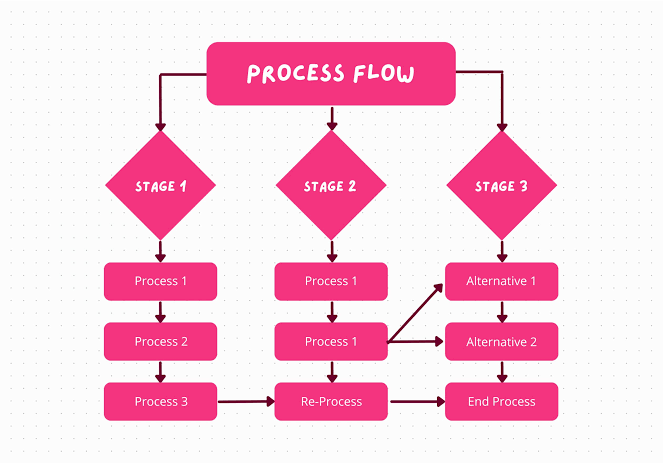
An effective AI workflow should connect content creation to distribution, customer engagement, and measurement.
Consider a simple lead-generation process:
Research → Content → Distribution → Lead capture → Follow-up → Measurement
Each stage should have a defined purpose.
For example, a search-optimized article may attract potential customers. A downloadable technical guide may help qualify their interest. An email sequence may answer common objections. A sales representative can then follow up with prospects who demonstrate genuine buying intent.
AI can assist at multiple stages, including drafting content, categorizing inquiries, preparing follow-up messages, and summarizing campaign results.
However, automation should not replace judgment when a decision affects customer relationships, pricing, contractual commitments, or sensitive information.
Start by automating repetitive, low-risk tasks. Introduce more advanced automation only after the underlying process works reliably.
Measure what matters
Track performance at three levels:
Level| Useful metrics| Business question
Efficiency| Production time, cost per asset, revision rate| Are we working more efficiently?
Marketing performance| Qualified traffic, engagement, conversion rate| Are we attracting and influencing the right audience?
Commercial impact| Qualified leads, opportunities, customer acquisition cost, revenue| Is marketing contributing to business growth?
Avoid measuring success exclusively by the number of posts produced or hours saved.
If AI reduces content production time by 40% but the resulting content attracts irrelevant traffic, the workflow may be more efficient without being more effective.
The goal is to improve productivity and business outcomes together.
5. Use Personalization Without Losing Customer Trust
Personalization can make marketing more relevant by adapting messages to customer needs, behavior, interests, and stage in the buying process.
For example, a returning customer researching a specific product category may need different information from a first-time visitor who is still learning about the company.
AI can help identify these differences and recommend suitable content or follow-up actions.
But personalization depends on the quality and appropriateness of the available data.
Before using customer information, establish clear rules covering consent, access, retention, security, and applicable privacy requirements. Use only the data needed for the intended purpose, and avoid placing confidential customer information into tools that have not been approved for that use.
Human oversight remains important for customer-facing messages, particularly when the system may make incorrect assumptions about an individual’s needs or intentions.
A useful principle: Personalization should make the customer experience more relevant, not make customers feel that their privacy has been disregarded.
6. Follow a 30-Day Implementation Plan
Businesses do not need to redesign their entire marketing operation to start benefiting from AI.
A focused pilot is often a better approach.
Week 1: Identify the opportunity
Choose one repetitive marketing process that consumes significant time. Examples include turning research into social content, preparing email newsletters, or categorizing incoming leads.
Document the existing process, the time it takes, and the problems you want to solve.
Week 2: Build the workflow
Select the appropriate tools and prepare your brand guidelines, approved data sources, prompts, and review checklist.
Keep the process simple enough that another team member could follow it.
Week 3: Run a controlled pilot
Use the workflow on a small batch of real marketing tasks.
Compare the results with your previous process. Check factual accuracy, brand consistency, editing requirements, and total time spent.
Do not assume the first version will be the best. Improve the workflow based on observed problems.
Week 4: Evaluate and refine
Compare the pilot with your original baseline.
Ask four questions:
1. Did production become faster?
2. Did quality remain consistent or improve?
3. Did the work contribute to a meaningful marketing objective?
4. Can the process be repeated safely and reliably?
If the results are positive, expand the workflow gradually. If not, identify whether the problem lies in the data, instructions, tools, review process, or underlying marketing strategy.
Conclusion: Strategy Remains the Marketer’s Competitive Advantage
AI is changing how marketing work gets done, but it does not eliminate the need for strategic thinking.
Businesses still need to understand customers, differentiate their offerings, build trust, choose the right markets, and create compelling reasons to buy.
AI can help execute these activities more efficiently, connect previously separate tasks, and make better use of available information.
The opportunity for professional marketers is to move beyond isolated experiments and build repeatable systems that connect insight, content, distribution, and commercial performance.
Start with one well-defined process. Establish a baseline, introduce AI with clear guidelines, measure the results, and improve the workflow before scaling it.
The future belongs not simply to marketers who use AI, but to marketers who know how to turn AI capabilities into measurable business value.